

The story
Crafted with passion, served with love
One Dish, One Mission
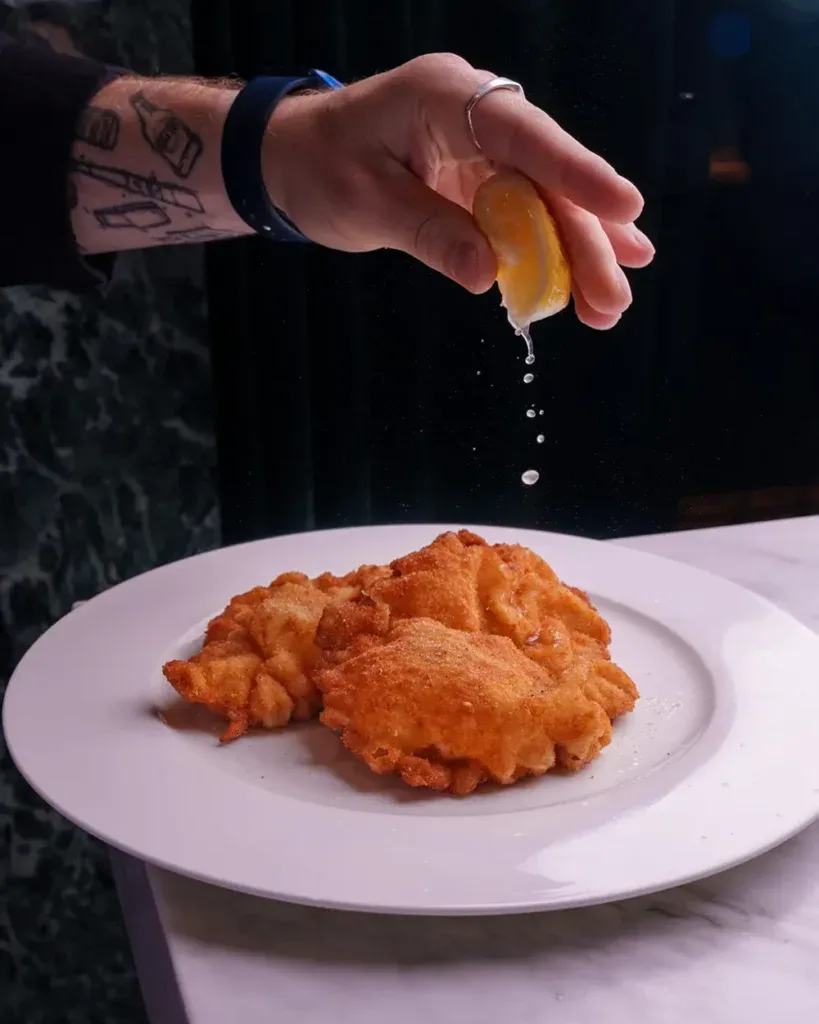
The name says it all. Dersch is an acronym for der Schnitzel — German for "the schnitzel," in the definite form. That deliberate choice of the definite article is not accidental: chef and innkeeper Roy Nader and his team have staked their entire restaurant on a single, unambiguous promise. Here, in a welcoming room on Tulegatan in Stockholm, the world's best schnitzel will be served.
The White Guide recognised Dersch at a very fine level for 2026, singling out Nader's focused vision and the kitchen's commitment to executing one thing with complete seriousness. Every main course on the menu is a variation of schnitzel — veal, pork, pike-perch, or an eggplant option for vegetarians. The form is fixed; the craft is what varies.
A Journey Before the Restaurant
Before a single plate was served in Stockholm, Nader and his team travelled across Europe tasting schnitzels wherever they could find exceptional ones. The goal was to identify the best meat, the finest breadcrumb coating, and the accompaniments that genuinely elevate the dish. What came back from that trip was not a collection of recipes so much as a foundation — a clear sense of what the schnitzel can be at its highest.
The Long History Behind a Simple Cut
Dersch takes the history of its signature dish seriously. The restaurant traces the schnitzel's lineage to Apicius, Europe's earliest known cookbook, compiled in the fourth or fifth century, which describes a thinly sliced piece of meat breaded and fried. Centuries later, the dish evolved in northern Italy into Cotoletta alla Milanese, famously encountered — and loudly celebrated — by Field Marshal Josef Radetzky, who was so taken with it that he set in motion the chain of events that brought the recipe to Emperor Franz Joseph I of Austria. The emperor, reportedly a reserved man, smiled for the first time in years upon tasting it.
It is a good story, and Dersch tells it well. But the restaurant's real argument is on the plate.
The Room and the Experience
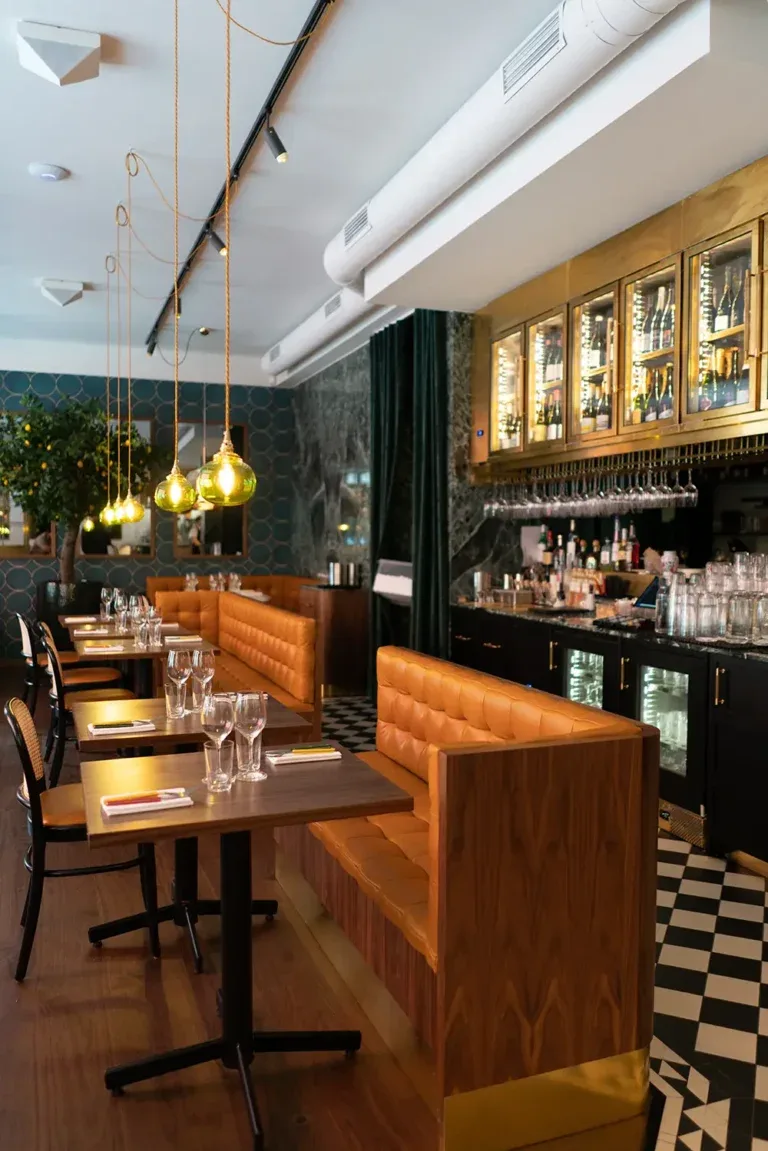
Dersch is open for dinner through the week and extends into lunch service on weekends, with space available for private parties. The atmosphere is described as a fantastisk miljö — a fantastic setting — paired with welcoming service. The focus is tight, the hospitality genuine, and the question left entirely to the guest: which schnitzel earns the title of the world's best?
Recognition
Awards & accolades
Ambience
A glimpse inside

Location
Find us
Tulegatan 2211353,StockholmStockholm, Sweden
08-888 935
info@dersch.se
Visit website
 Facebook
 Instagram