
The story
Crafted with passion, served with love
A City Address with Countryside Roots
Bua sits on Biblioteksgatan in central Östersund, but its DNA comes straight from Jämtland farmland. Founded by Johan Rudsby — the same figure behind the acclaimed countryside restaurant Nästgård — Bua carries that spirit into an urban setting with a noticeably lighter touch. White Guide 2026 described it precisely: a slightly more laid-back younger sibling that left the countryside for the city and made a rapid career. Mischievous, curious, and very straightforward.
How the Food Works
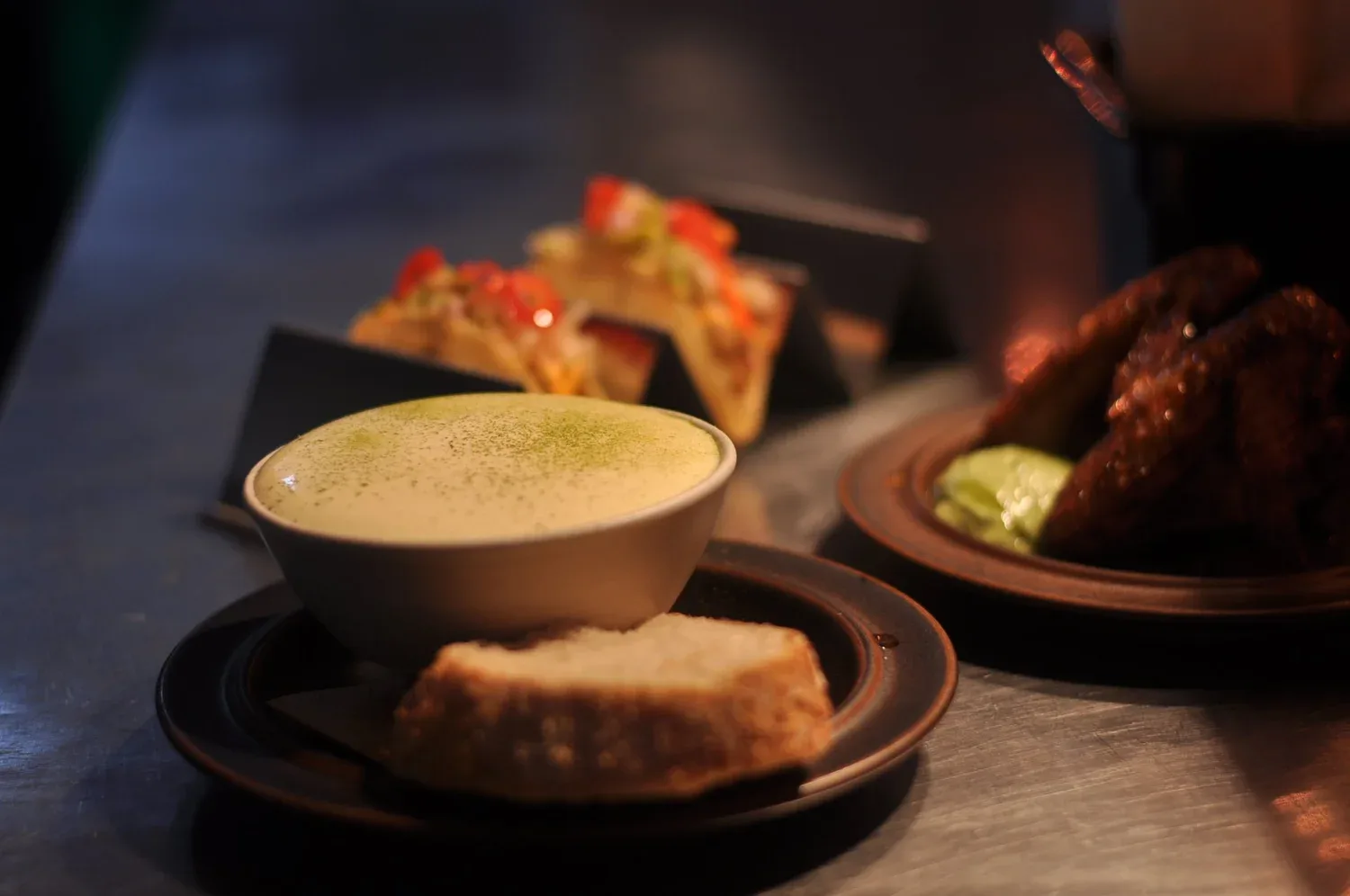
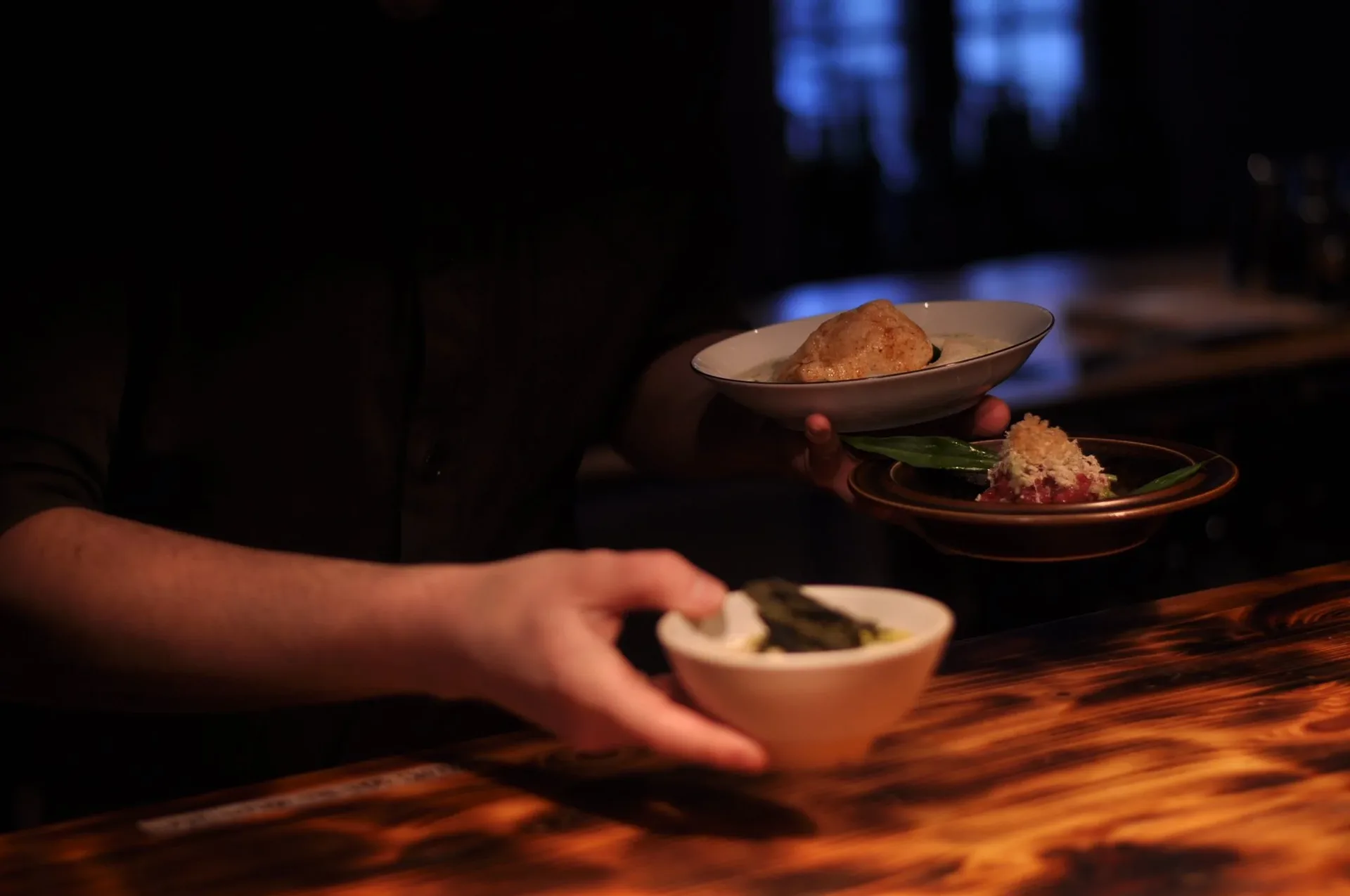
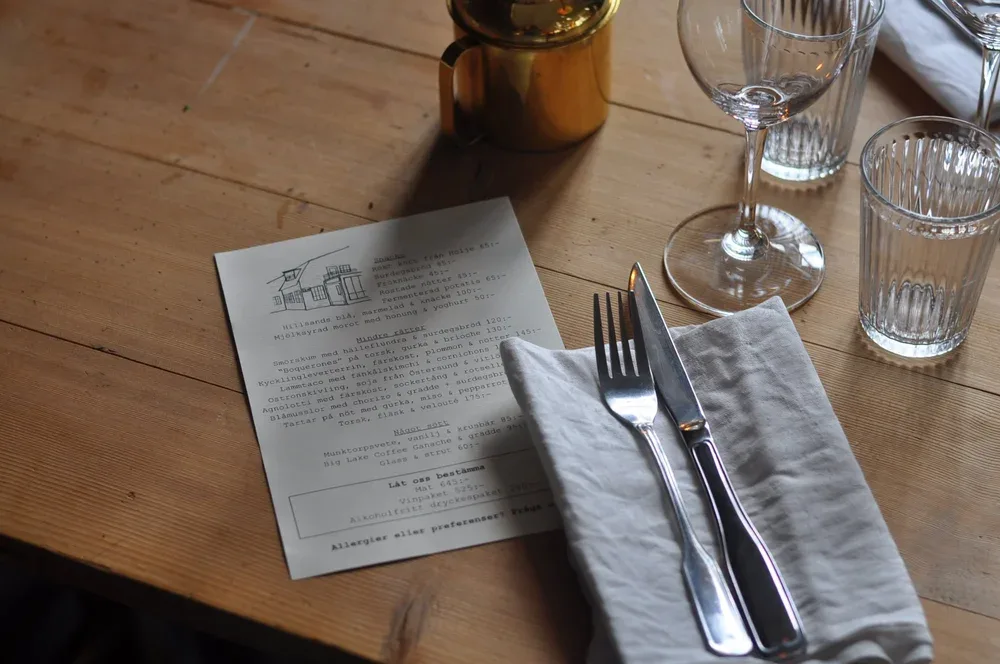
The menu is built around smaller dishes, and the kitchen recommends choosing three per person or ordering a spread to share across the table. That format suits the cooking well. Dishes like beef tartare with anchovies, gooseberries and aged cheese, or cod with parsnip, hollandaise and apple show how the New Nordic approach works here — local ingredients handled with precision, but without ceremony. Wonton filled with meat from the Hölje farm, served with wild garlic and kimchi, is a good example of the playfulness White Guide noticed: technique and terroir, but no stiffness.
Snacks anchor the lighter end — sourdough, seed crispbread, Pommes Anna with horseradish and onion paired with an ice-cold shot of Norrbotten Vodka. Desserts keep the same register: black-currant ice cream with almond cake, or whey-butter ice cream with rhubarb and miso.
For guests who prefer to hand over the decision entirely, the kitchen offers a set of four or seven dishes chosen from the day's menu, with optional wine or non-alcoholic pairings.
Sourcing and the Kitchen's Logic
Like Nästgård, Bua works seasonally and with sustainability as a given rather than a talking point. Meat comes from traceable, preferably local producers — and when possible, from the team's own farm in Hölje. Vegetables travel from across Sweden, but when the short Jämtland growing season opens up, the kitchen pulls as close to home as it can. The menu shifts constantly, sometimes within the same week, shaped by what smaller producers can offer and what the kitchen finds interesting at any given moment.
Drinks
The wine list leans toward independent European producers — grower Champagnes, natural wines from Alsace, Jura, and Austria alongside more classical bottles. Draught beer comes mainly from local breweries. The non-alcoholic programme is almost entirely house-made, drawing flavours from forest and kitchen garden — a detail that reflects the same New Nordic sensibility as the food. A cocktail menu rounds things out, mixing classics with the kitchen's own creations.
Recognition
Awards & accolades
Ambience
A glimpse inside
Location
Find us
Biblioteksgatan 6C83130,ÖstersundÖstersund, Sweden
072-232 99 08
info@nastgard.se
Visit website
 Facebook
 Instagram