
The story
Crafted with passion, served with love
The Master Behind the Counter
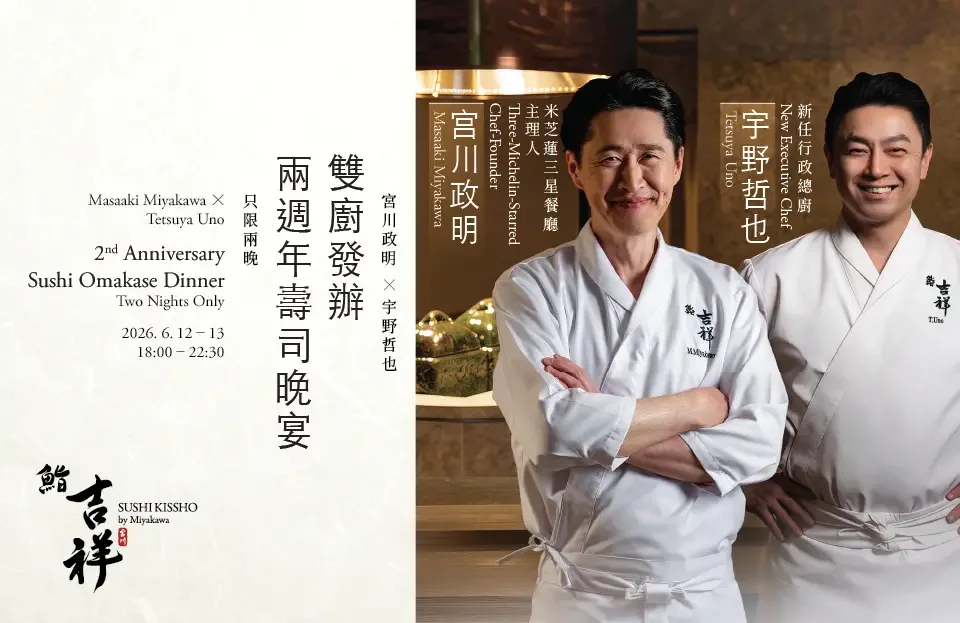
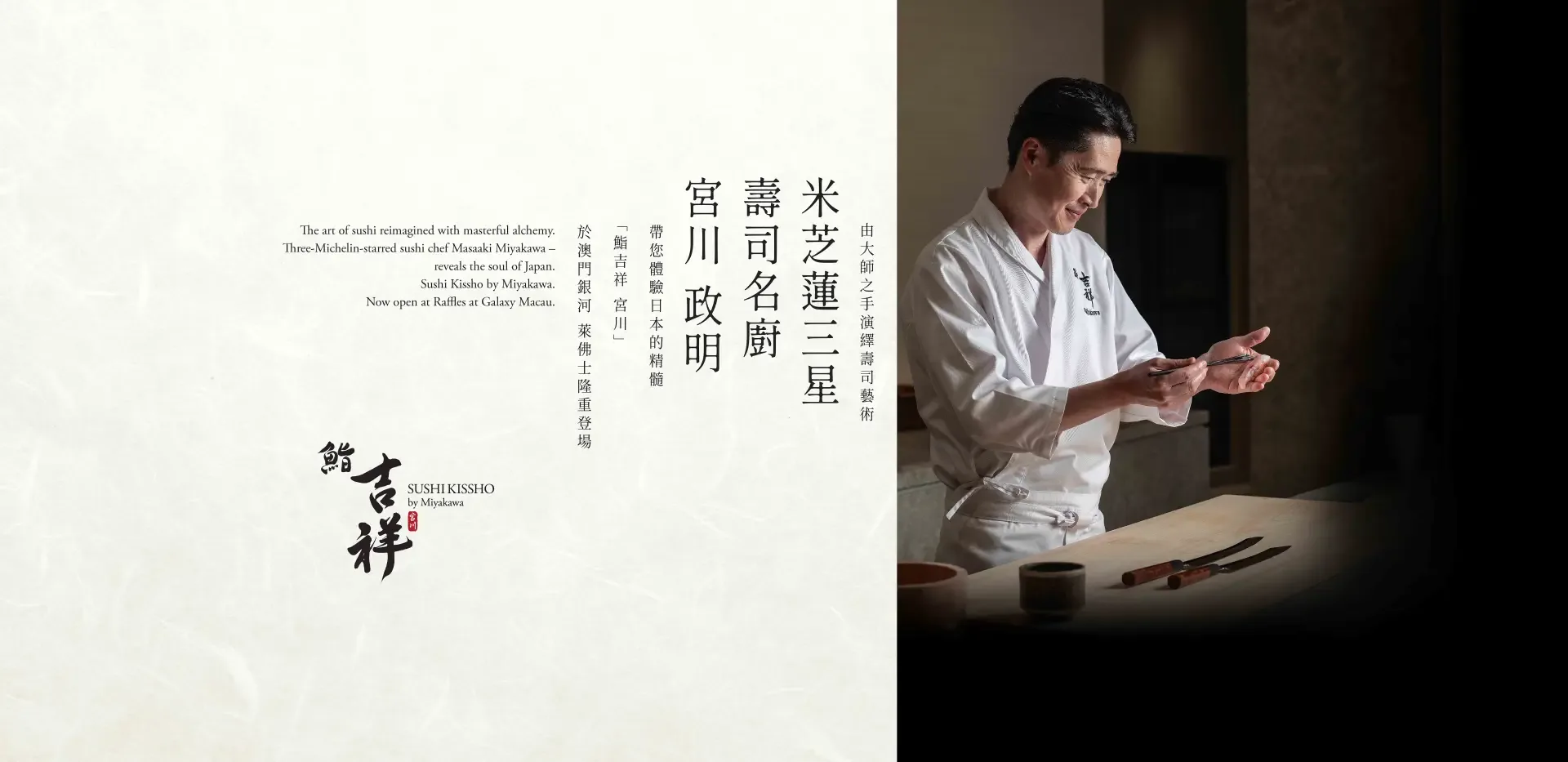
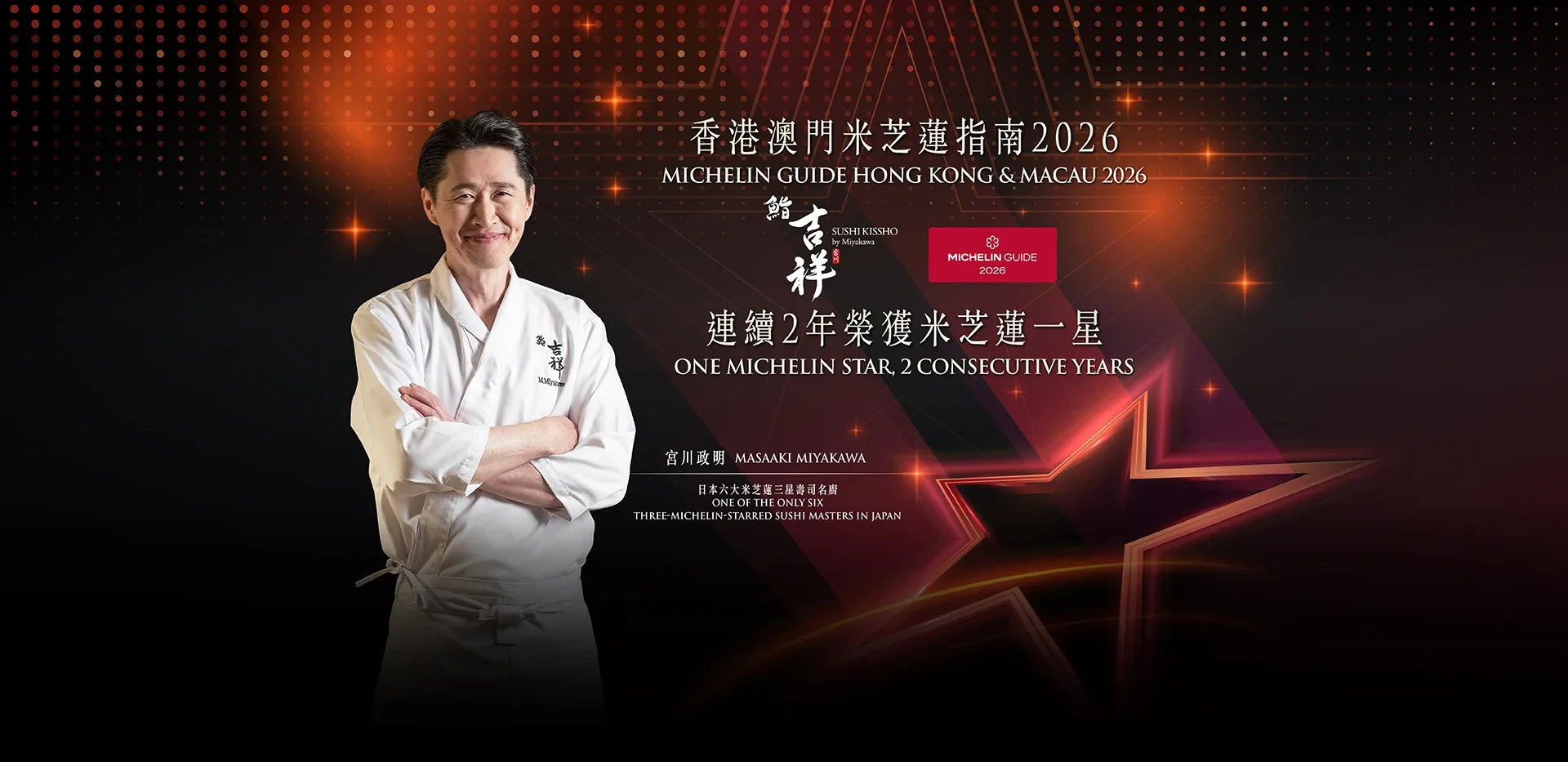
Master Chef Masaaki Miyakawa is among the rarest of sushi chefs — one of the few in the world to hold three Michelin stars. Sushi Kissho by Miyakawa is his first restaurant outside Japan, and it earned a Michelin star in its very first year of operation. The recognition has since grown: the restaurant now carries a Forbes Travel Guide Five-Star Award for 2026, alongside a string of accolades from Travel + Leisure, the South China Morning Post's 100 Top Tables, and others. The name itself sets the tone — "Kissho" means good fortune in Japanese, a quiet acknowledgment of what nature provides in every season.
A Counter With Its Own Story
The physical heart of the restaurant is a sushi counter carved from two pieces of Kiso Hinoki cypress, each plank more than 300 years old, sourced from Nagano Prefecture and transported to Macau by a specialist hinoki master. The wood's gentle fragrance and distinctive grain fill the room with a calm that feels entirely deliberate. Only ten seats face this counter, where executive chef Hironori Satake — who previously led Chef Miyakawa's establishment in Niseko — and two fellow chefs prepare every course in full view of the guests. Behind them, a curved cooking island handles everything from appetizers to desserts.
Edomae, Uncompromised
The menu is an omakase built entirely around traditional Edomae sushi, the style that originated in Tokyo centuries before refrigeration, when fish were cured, marinated and seasoned to draw out their deepest umami. Miyakawa's team sources seasonal fish and ingredients from Japan's legacy growers and family fishermen — suppliers whose relationships with the restaurant are as carefully maintained as the techniques themselves. The kohada, a silver-skinned fish that demands precise marination, is singled out as a particular expression of the chef's dedication to tradition. With 98 years of combined expertise across the kitchen team, each piece of sushi reflects that accumulated knowledge.
The Private Room
Beyond the counter, a private dining room seats another ten guests in a space that draws on Japanese aesthetics with considered restraint. A living bush suggests a garden corner; an LED ceiling shifts through natural light conditions across the day; and a crack in the ceiling above the table references kintsugi — the Japanese practice of repairing pottery with gold, treating imperfection as something worth honoring rather than hiding.
Mastering the Moment
Miyakawa's guiding principle, as he describes it, is "mastering the moment" — the idea that each individual piece of sushi deserves complete attention. That philosophy shapes the entire experience at Sushi Kissho: the spare, warm interior in hinoki wood tones and beige, the small number of seats, the direct engagement between chefs and diners. This is Edomae sushi practiced without shortcuts, in a setting built to match it.
Recognition
Awards & accolades
Ambience
A glimpse inside
Location
Find us
2F, Raffles at Galaxy Macau, Cotai, Macau, ChinaTaipa, Macao
853-8883-2221
sushi.kissho@galaxyentertainment.com
Visit website
 Facebook